Water: Part 1, essential Off-Grid Accessories
Without good, clean drinking water, you just can’t survive. This makes drinking water your most valuable resource when you’re camping off the grid. Most camper trailers will have water tanks fitted as standard these days, there is much more to off-grid water storage than meets the eye. So, let’s take a closer look.

Drinking Water
Now this is a tricky question, one that can be broken down into a few different categories and schools of thought. First and foremost, we need to determine how much drinking water to keep on board. This will depend on a few things including the expected temperatures, how many people you’re catering for, the amount of activity you expect to be doing and how long you will be off the grid for. As a rule of thumb, allowing 5L of water per person per day for drinking is a good rule of thumb for average conditions. You can expect to double that figure if you’re in above average temperatures.
It’s always best to keep your drinking water supply separate from your general-use water to ensure you don’t tap into valuable drinking water on accident.
Grey Water Activities
On top of drinking water, you’ll need to allow enough water for showers, washing up, and cooking, which ends up turning into grey water. It’s hard to put a figure on how much water you’ll need for grey water activities, but a good way to start is to place a 20L bucket under your shower head and time how long it takes to fill it up while simulating the same water flow and heat as your showering habits. If it takes five minutes, you’ll know that for every five-minute shower you will use roughly 20L of water.
It’s also a good idea to work out how much water you use while washing the dishes and allow plenty of water in the rest of your calculations for cooking and washing your hands.
Inline Water Filter
One of the best ways to ensure fresh drinking water is always available is to install an inline water filtration unit. Now there are heaps of different options on the market to suit a whole range of price budgets and filtration requirements. The idea is to simply install the filter inline in-between the water tank and a separate “drinking water” faucet. This ensures that water only flows through the filter when it’s required for drinking purposes, which extends the filters life.
You can also look at installing a pre-tank filter which helps reduce the number of contaminants that enter the tank itself.
Stainless Steel Vs Plastic Tanks
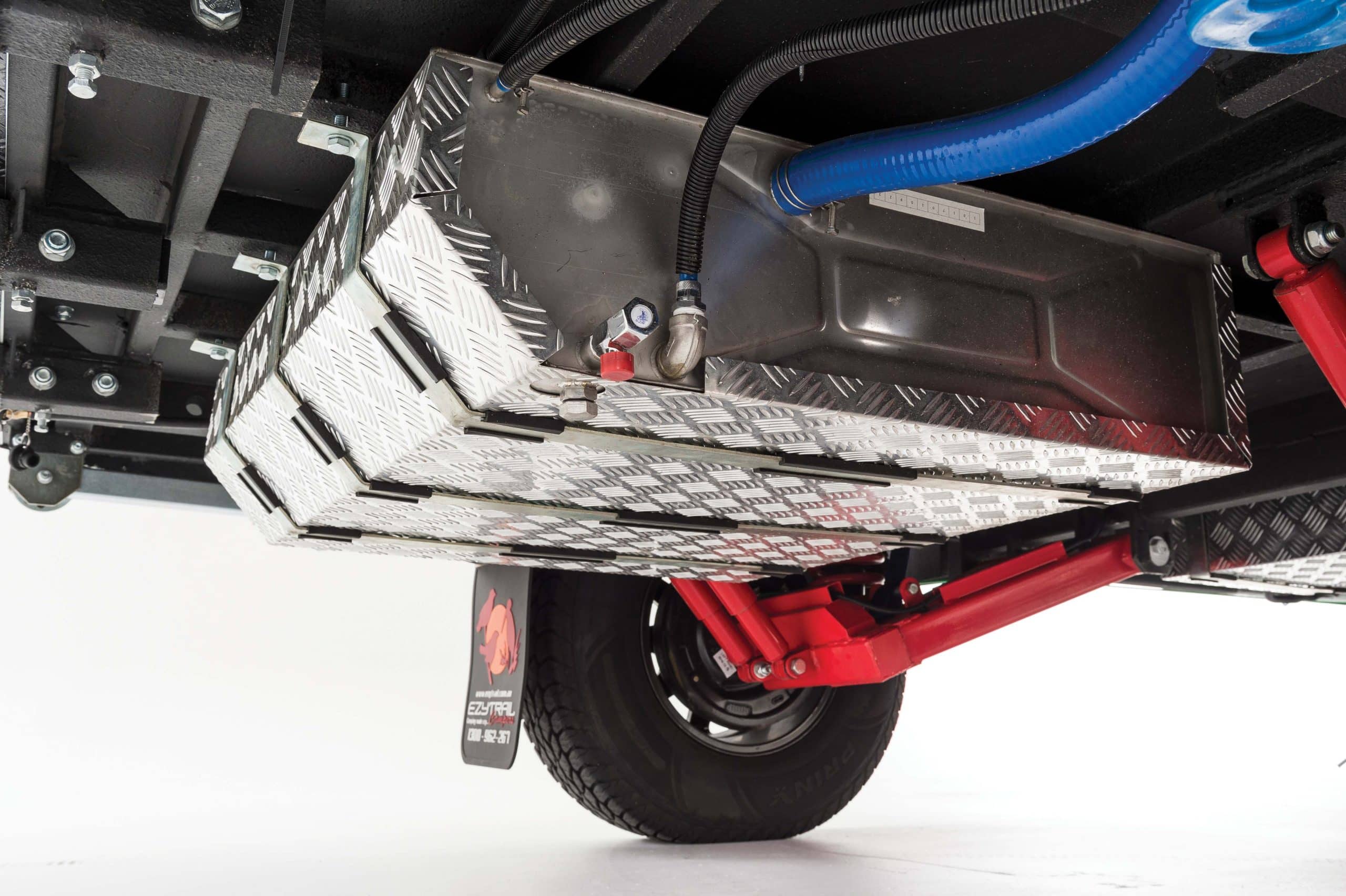
In general, water tanks for camper trailers are constructed from either stainless steel of plastic. Plastic water tanks are light weight, resistant to corrosion and cost effective. On the other hand, stainless steel is non-porous making it easy to clean and hygienic, durable and offers superior temperature regulation. Most people report the water has a much more pleasant taste than when it’s held in plastic, and in general if maintaining high water quality is a priority, then stainless steel is preferred.
WORDS BY MICHAEL BORG